
Educational children’s songs as an antidote to “the machines”
Inspiration for this blog comes from an interview with Demis Hassabis, Nobel Laureate and Co-Founder and CEO of Google DeepMind, and Sebastian Mallaby, his biographer and a journalist, hosted by Intelligence Squared a few months ago in London.
Towards the end of the interview, Mallaby is asked for his thoughts on what skills parents should encourage their children to learn to prepare for careers in the age of AI. He cites goal setting as one and “doubling down on the human” as the other.
We wanted to expand on the essence of this latter point – often emphasised in response to this question – and use it to propose another case for some of the more intangible benefits of using educational children’s songs in the classroom in these fast-changing times.
In an era that asks us to emphasise what it is that differentiates us humans from “the machines” (as Mallaby puts it), we believe that songs and music can play an important role. The feelings that music and songs evoke in us are embodied. From the urge to move, sing, celebrate, express joy, excitement, or sadness, music generates a rich range of neurobiological, physiological and emotional responses. As “the machines” can’t feel, this capacity is deeply human.
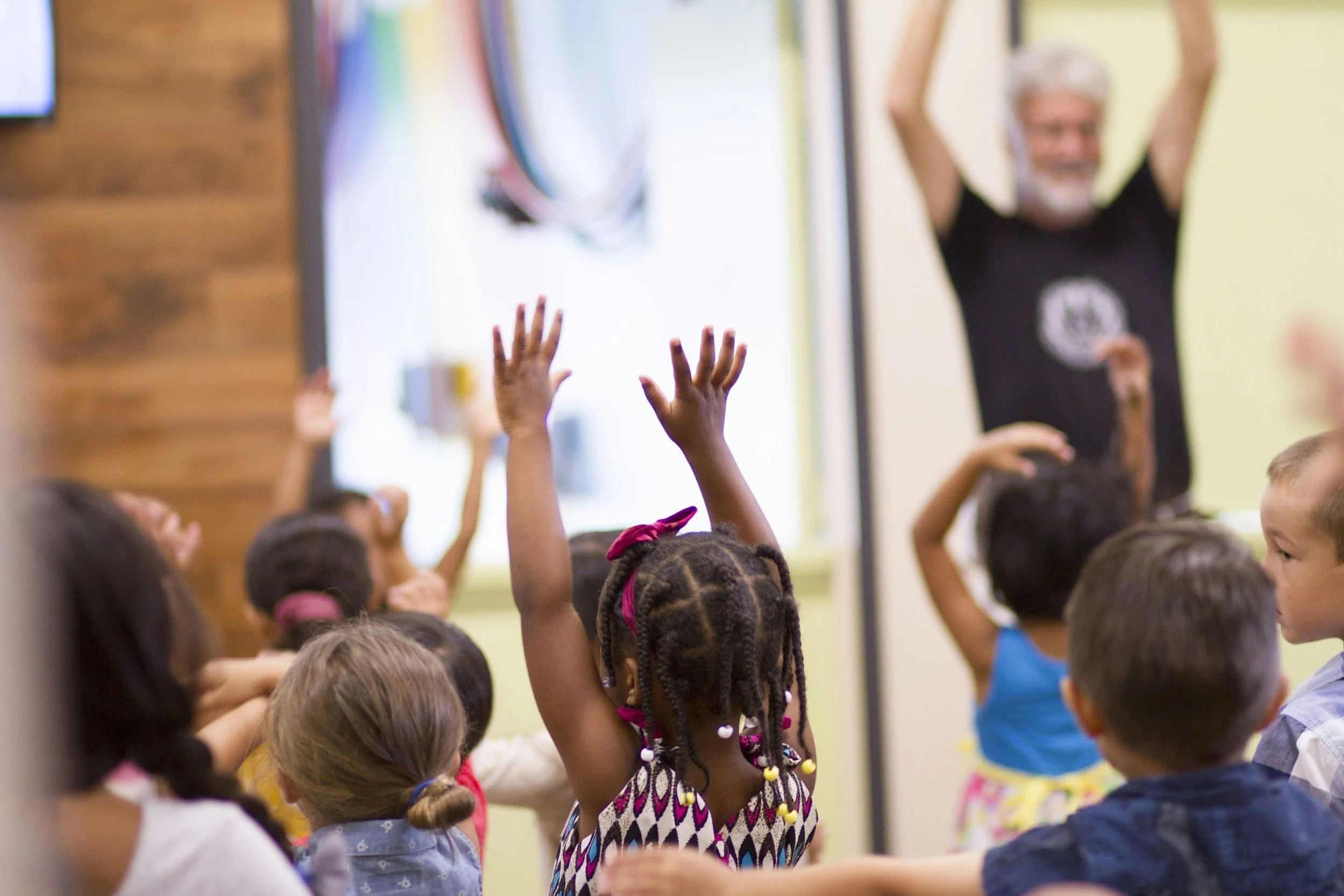
So our universal response to music as a species is something that is about as human as it gets, and not only that but it connects us to others through the shared emotional experience. When so much of modern life is dominated by AI, Big Tech and screens, integrating educational songs into the classroom can provide an opportunity for learners to connect with these deeply human qualities and, through them, others, and this way songs can serve as an antidote to the heavy emphasis on “the machines”.
At Creative Listening, what makes our children’s songs special is our combined respect for young learners, the rich history of music and the human craft of songwriting. Due to technology, there has been a trend towards synthetic-style educational songs and media designed to exploit children’s attentional systems. But to think that this is the only kind of music young learners enjoy is to underestimate them. The proof? Just look at how many children react with delight when hearing the Beatles, and other classic artists, for the first time. Unlike purely pop-focused children’s songs, our songs can cover a range of genres, rhythms and styles. We try to weave musical texture, as well as humour, into our human-crafted compositions to give young learners a rounded experience rather than another piece of overstimulating or artificially-made media.
Back to the interview itself: Hassabis, whose enthusiasm for AI’s potential to answer the big questions in science is infectious, proposes some intriguing ideas. From finding ways to use AI to enhance human creativity, rather than replace it, to highlighting the new opportunities AI will bring, he also has some thoughts on how to reshape education from the ground up too (58 minutes in).
You can watch the interview here when you sign up: https://www.intelligencesquaredplus.com/videos/demis-hassabis-and-sebastian-mallaby-on-the-quest-for-agi-free
Want to find out more about our ELT and educational children’s songs? Book a call with Luke.
Discover our ELT and educational children’s songs: https://creativelistening.co.uk/childrens-songs
By Aimy Marling and Luke Vyner